
Unarmed Weapons
My Run-ins with Law Enforcement - DAY #39 – Mile 5223

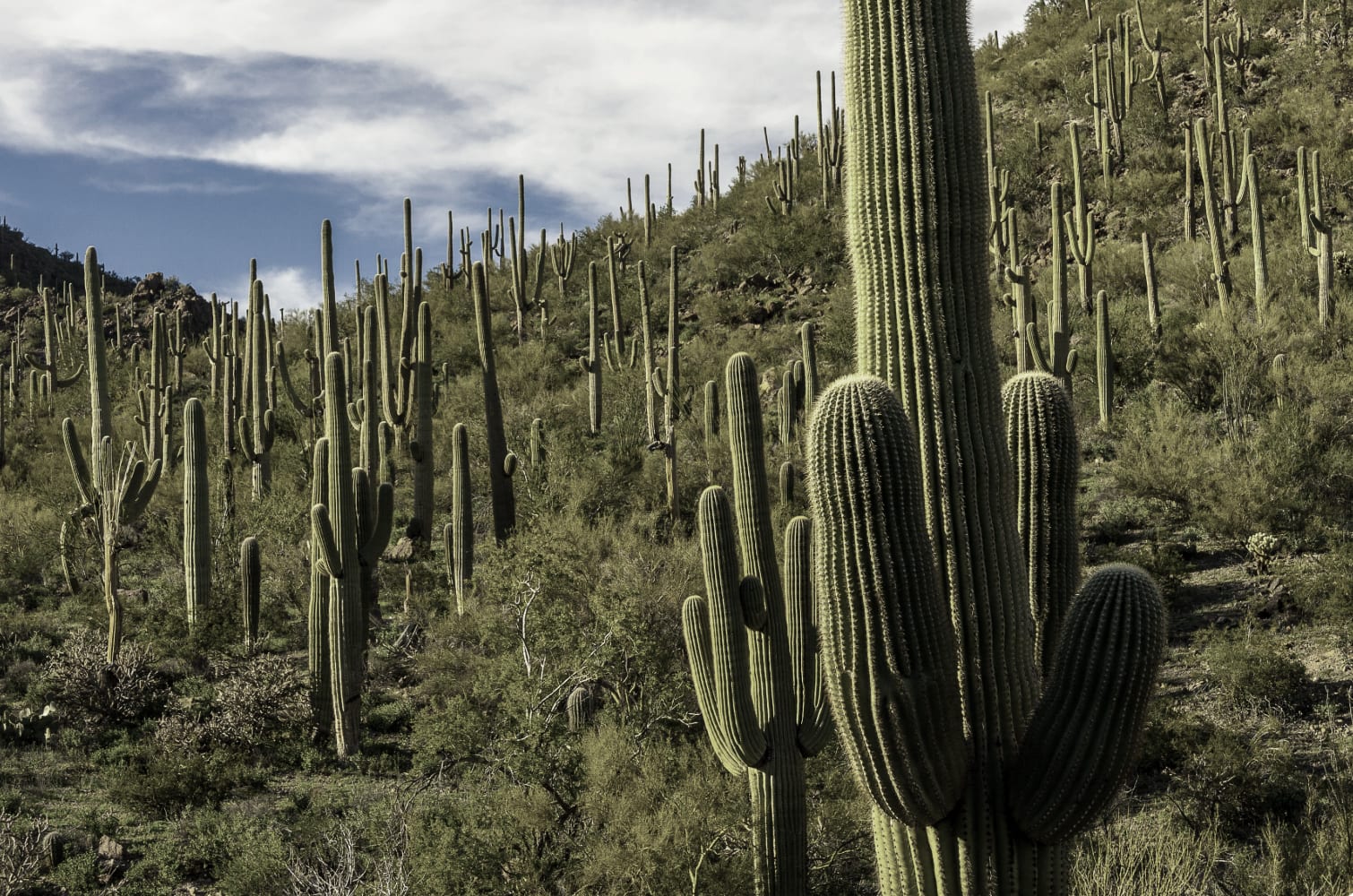
Soon after I crossed Arizona’s eastern border, I was greeted by a field of saguaros standing like soldiers dressed in sage corduroy. They towered over the desert floor as if keeping watch, protecting me for what was to come.
A week later, I was pulled over by a cop.
I knew it was going to happen. The officer had been tailing me for miles. Just as I’d crossed into the oncoming traffic lane to pass a car, another vehicle crested the hill up ahead, heading toward me. I accelerated to get around the car I was passing as quickly as possible. When I saw in my rearview mirror that the car on the hill had made a U-turn, I suspected it was a cop.
I didn’t think I’d done anything wrong. I’d passed on a dotted yellow line, leaving plenty of space with no risk of collision. Still, he followed me and then—chirp, chirp, chirp.
I’ve driven hundreds of thousands of miles documenting America. My driving record is spotless. I rely on cruise control like my life depends on it—which it does, if I’m pulled over by the wrong cop.
“Hello, officer. Is there a problem?”
“You were speeding back there.”
“Really? It must have been when I was passing that car. I guess that was you coming over the hill. I sped up to get over as quickly as possible, as a courtesy.”
“Well, I clocked you speeding. License and registration, please.”
As I reached into my bag for my license, I said, “I always use cruise control, so normally I don’t drive that fast. I was just passing that car.”
Who doesn’t speed up when passing? I thought. How else do you get around someone? Even if they’re under the speed limit, you have to accelerate. Admittedly, I sometimes gun it because it’s uncomfortable driving in the wrong lane. And in this case, the man I passed was riding his brakes and driving below the limit. In fact, the two cars ahead of me had passed him, too.
I wanted to plead my case, but I worried it would come off as argumentative, so I kept my explanations to myself.
I tensed up as I reached into the glove compartment for my registration, thinking about Wesley Lowery, the Black journalist who said he keeps his papers in the center console so his hands stay visible during traffic stops. I slowed my movements.
“Is this a rental car?” the officer asked.
“No, I purchased it,” I said, proud of my brand-new Kia Sportage.
“It’s registered in Illinois?” he gestured at the plate.
“Yes.”
“So this isn’t your current address?” he said, holding my New York license.
“No. I recently moved from New York to Chicago,” I knew my nomadic life rarely makes sense to most people.
“What is your current address?”
Another reasonable question, but complicated for me. “I’m an author on the road conducting field research for the next couple of years. My things are in storage in Illinois, and I forward my mail to my sister’s house in Columbus, Ohio.”
He stared blankly, said nothing, and walked back to his cruiser.
As I waited, I reached for my phone to call my sister, to tell her I’d been pulled over. I considered putting the phone on speaker to record the event, but first I checked my gut. In that moment, I didn’t feel danger. He was white, but he wasn’t barking orders at me. His tone was firm, not aggressive. He almost seemed nice. I put the phone down and trusted, for the moment, that he trusted me.
Five minutes later, another cop arrived. I watched in my rear-view mirror as they talked. I couldn’t see the second officer’s face or hear his tone, which made me nervous.
I thought about Ron, my stepfather, and the story he’d told me when he was seven years old and his parents had been pulled over. As the sheriff approached their brand new 1953 Chevy, his father turned to Ron in the back seat and said, “Don’t say a word.”
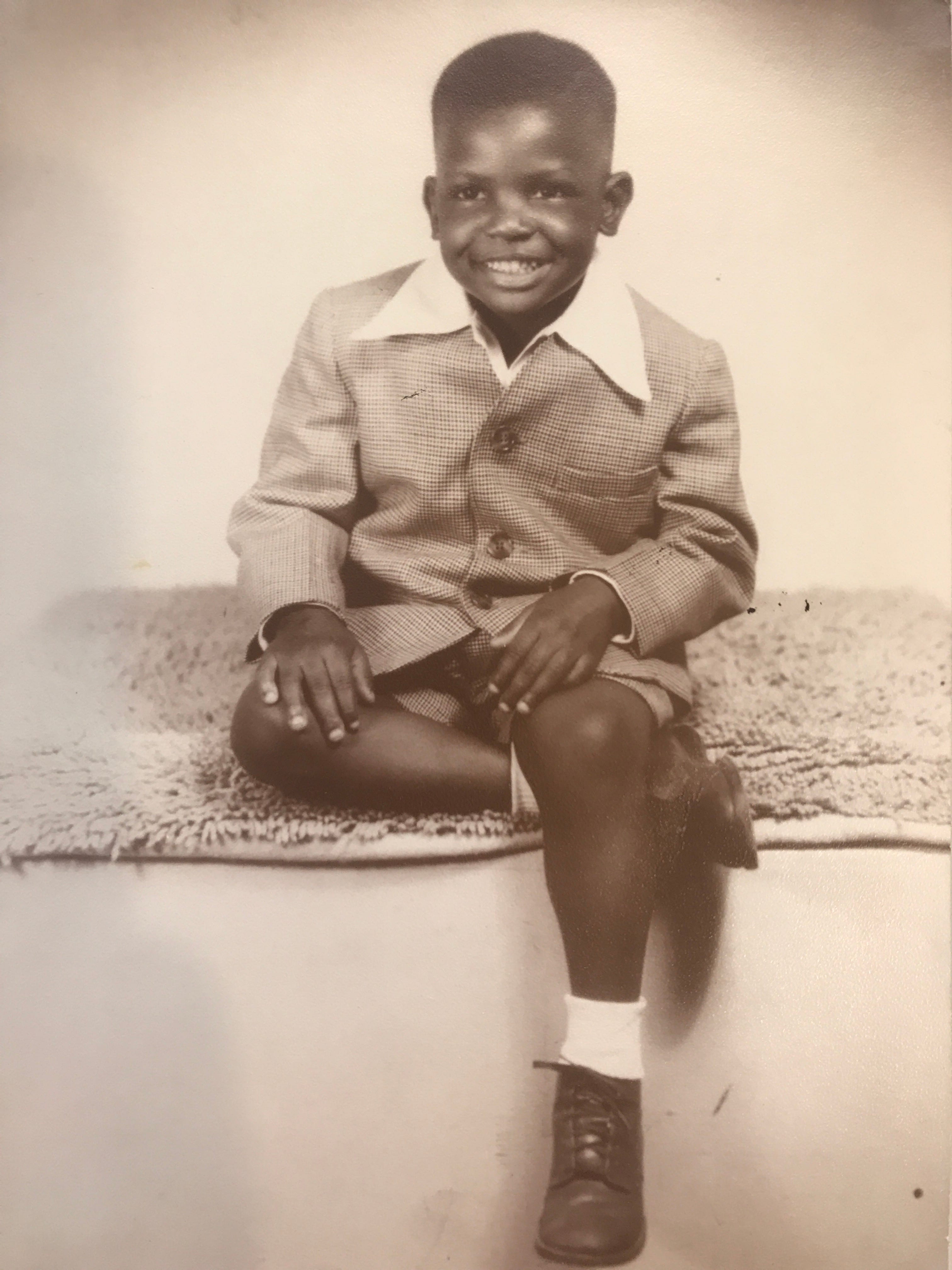
Ron had been told to be quiet before, but this time he felt the words sit in his stomach like a virus.
“Where did you get this vehicle? Where are you going? And who are these people with you?” his father was asked.
“It’s my employer’s car.” Ron’s father said. He pointed to his wife and pretended not to know her. “She’s my employer’s maid, and that’s her son in the back. I’m driving them home.”
The sheriff angled his eyes into the back seat. Ron sat frozen, afraid to move or breathe.
“Where’s your hat?” the sheriff barked.
“Hanging behind me in the back seat, officer.”
The sheriff waved them on.
As they drove across the Tennessee border, there was no discussion about what had just happened, but the gravity of the situation was clear. Ron turned his head to look at the black, unassuming cap that had been hanging next to him in the back seat ever since he could remember. It was only then that he realized why he’d never seen his father wearing it. His mom wasn’t a maid, and his dad wasn’t a chauffeur. He had a good job with the railroad, and this was their family car. Until that day, Ron had never paid attention to that hat, but now he knew it was a chauffeur’s hat. A ruse, a prop—a lifesaver.
During the Jim Crow era, the chauffeur’s hat was the perfect cover for every middle-class Black man pulled over. If Ron’s father had told the sheriff the truth—that he was driving his own car and that they were a family on vacation—the sheriff would have assumed the car was stolen. In the event the sheriff did believe it was Ron’s father’s car, the rage and jealousy he might have felt at the thought of a Black man owning a nicer car than he could afford might have triggered a beating, torture, or even murder. From that day on, Ron saw chauffeur hats strategically placed, like unarmed weapons, in the back seat of nearly every Black man’s car.
As each minute passed waiting for the Arizona cop to return to my car, I imagined the best-and worst-case scenarios. It felt like a coin toss—one could happen just as easily as the other.
I’ve had a few bad run-ins with cops. One happened in 1998 when I was entering the US, crossing the Canadian border with my friend Cheryl. All the cars in front of us were quickly passed through after a short exchange with border guards, but when we reached the front of the line, the agent took one look at me and signaled us to park and get out of the car.
As he patted me down, he asked, “Are you a diabetic?”
“No,” I answered, but I knew this wasn’t going well. That question is code that he’d pegged me as an IV drug user, and he wanted to make sure I didn’t have any needles in my pockets that could stick him.
Cheryl, who is white, wasn’t worried. She assumed that since there were no drugs in the car, everything would be fine. I knew that regardless of the truth, it could all still go very wrong. My “rights” are already questionable on American soil, but at the border, all bets are blurred. It’s a nebulous, nowhere-land where patrol officers on power trips have less accountability than regular cops.
After an hour, they moved us into an interrogation room.
“The reason you’re here,” the officer said, staring at me, “is because we found narcotics in the car.”
I returned his stare, thinking, Not unless you planted them.
“What could you possibly have found?” Cheryl demanded.
I closed my eyes, shaking my head at how naive and privileged she was, wondering what it would be like to live in a world expecting to be treated fairly.
“We found this.” He held up a seed.
“It looks like a bagel seed,” she said.
The officer ignored Cheryl and proceeded to bombard me with questions.
“Where are you from?”
“San Francisco.”
“What do you do in San Francisco?”
“I’m a student at San Francisco State University.”
“Why are you in Canada?”
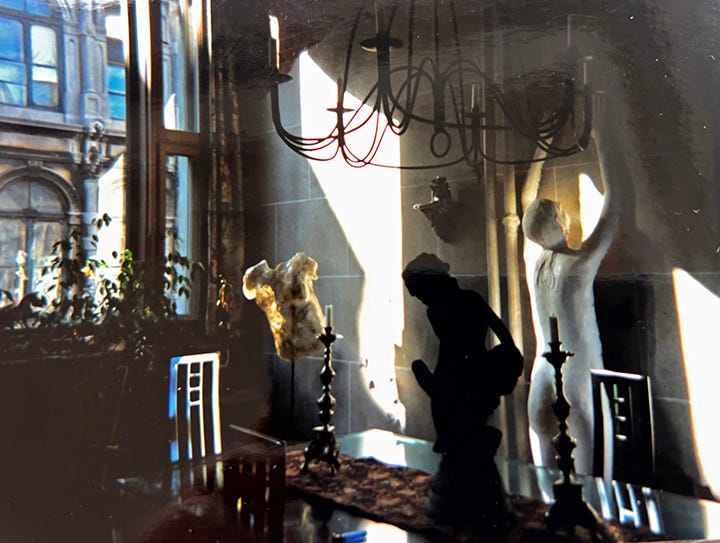
“Visiting a friend in Montreal.”
“How do you know them? What does your friend do?”
“We met through a friend. She’s an artist.”
“Who else did you see?”
“No one.”
“How long was your trip?”
“A few days.”
“Where are you going now?”
“To Johns Hopkins School of Medicine to show my portfolio to apply for their graduate program. I’m studying to be a Medical Illustrator.”
It was the only answer I elaborated on, hoping that the answer it might confuse his single-minded assumptions.
The interrogation continued for another hour under. Finally, as he dropped the seed into a clear liquid, he said, “If this turns purple, you’re both going to jail.”
It didn’t. They let us go.
Cheryl chirped, “Like I said, a seed from a bagel.”
Cheryl dismissed the whole event as an inconvenience, but the fear I’d felt in that interrogation room was etched in my amygdala, and it’s still there nearly 30 years later.
It shouldn’t be this way—wondering whether a traffic stop could end your life.
For years, I was frustrated that Ron only drove at night on road trips. He’d hurry down the plush carpeted stairs in their suburban, ranch-style home stairs, Howlin’ Wolf CDs in tow, calling out to Mom, “Ready to roll!”
“It’s after 10 pm. Why can’t you drive during the day?” I’d ask.
His answer was always the same.
“Traffic.”
I got that same explanation for years.
“It’s dangerous. I’d say. And what if you fall asleep at the wheel?
“I take a nap before I leave.”
Ron had an answer for every question, but none of them made sense to me.
I didn’t understand until I’d been working on Overground Railroad, and I’d read in the archives that driving at night was a common practice for Black men during Jim Crow.
For me, the point of a road trip is to see the countryside in all its glory and banality. For Ron’s generation, survival came first. And that meant driving in the dark.
The officer in Arizona wrote me a ticket and let me go.
I hadn’t planned to write about this encounter because nothing happened. And yet, I was exhausted from the fear of what could have happened. When I examined those feelings, I started writing.
I also wrote this to show that not every police encounter ends in tragedy. But I still don’t have the luxury of assuming everything will be fine. Statistically, as a Black American, I am three times more likely to die at the hands of law enforcement than a white person.
It’s been more than seventy years since Ron sat in that back seat of his father’s car. As I waited for the second officer in Arizona, I thought about the unarmed weapons I carry. I used to think my Harvard ID might protect me—a signal that I had access to lawyers if anything illegal went down. Even though my ID had expired years ago, I kept it for that reason. But America has changed since I left Harvard in 2017. Today, that same ID could work against me, just as Ron’s father’s car once did.
As Mark Twain said, “History doesn’t repeat itself, but it often rhymes.” So we keep slipping on the same warnings, stumbling over the same landmines, still trying to reach the promise of freedom and equality. So if in another seventy years we find ourselves scratching our heads, wondering why this experiment that is America has not proven to work, I wouldn’t be surprised. These are the times when the fight feels futile.
But we keep trying.
Beautifully written. Have shared it to my Facebook feed, thank you so much
I felt sad and tense in reading this Candacy. I'm sorry you and others still have to deal with these inequities of treatment. Thank you for sharing.